Hello EA’s & Potential Enterprise Architects One of the biggest questions I am asked, or more common anyways, is “How Do I Become an EA?” The answer is a little complicated, and so it deserves this video explanation. I speak about the Enterprise Architect Education or Enterprise Architecture Training you might take, I speak about the Enterprise Architect Role, as well as some of the activities that an Enterprise Architect…
Enterprise architecture
Enterprise Architecture, EA
How to Sell Enterprise Architecture to Stakeholders

Here is a free report I wrote that will give you some of the best ideas on how to sell Enterprise Architecture to your stakeholders. Enjoy!
Zoom Factor Book Update

You’ve heard about it, might have read about it and it’s just about time to be able to access it. It you were at my 2008 Las Vegas presentation entitled “Good to Great – Paving the Road to Excellence for the Enterprise Architect, this is the full length version complete with how to get this knowledge. This is the full body of knowledge and research on which the abbreviated speech…
Chief Architect’s Big Three Secrets for Enterprise Architecture Planning
In a previous article, the spotlight fell on three biggest risks the Chief Architect needs to manage before moving onto something less tactical. Consider now the area of strategic planning and opportunities in your future state landscape. Three key sources that the chief architect needs to explore are: CEO’s Top Strategic Drivers CIO’s Primary Concerns Enterprise Portfolio Management In fact, the CEO owns, knows, eats and breathes their top three…
Chief Architect’s Big Three Strategy Secrets

Sounds like a pretty salesy headline, doesn’t it? Well – I’ve got you reading and that was my intention. It’s the same attention that you need to pay to your enterprise, your business or your organization. Times are tough out there, and companies need you more than ever to demonstrate value, but also to roll up your sleeves and help to keep your company afloat. There aren’t great job descriptions…
Chief Architect Absolutely Guarantees Value

How can the Chief Architect Absolutely Guarantee Value? Why does the business demand change? This is the fundamental question you should asking yourself as a Chief Architect before doing any architecture work. Many current IT strategies and architectures are failing. Senior business executives report that fewer of 25% of IT projects achieved defined project level goals. Fewer than 12% of fundamentally advanced the business strategic goals of the enterprise. Why…
The Chief Architect’s Biggest Three Strategy Secrets

Way too long since the last post – my bad. Too much book! Sounds like a pretty sales-y headline, doesn’t it? Well – I’ve got you reading and that was my intention. It’s attention that you need to pay to your enterprise, your business or your organization. Times are tough out there, and companies need you more than ever to demonstrate value, but also to roll up your sleeves and…
Enterprise Architecture Strategy – Do I Need A Strategy to Get One?

It’s nearing end of summer and slowly, folks are getting back from vacation or they are out shopping for school supplies. Maybe a last minute golf game with friends, or perhaps colleagues. A day at the beach if weather permits. As we see the first signs of the leaves turn color, we turn to that busy planning month of September. We all get back from the lazy (lazier?) days of…
Enterprise IT Architecture Support or Sponsorship?

And What’s the Difference? It’s been a long time since I wrote part 1, but I’ll try to get the next few parts out asap. If you recall, I was writing about the purpose and reasons for Enterprise Architecture. Along with planning and strategy, execution is critical. We must create and tailor our messages for our audiences in the most appropriate manners, and continually educate and grow support for the…
A New Day for Great IT Architects

Monday is as good as any to do something new. For most, above average. Well – today I figured I’d **make** the time to move this blog to the Architect Boot Camp site. Here it is – hope you benefit from it and I do have plans (hopes) to post much more regularly. What’s new? I’ve been really busy getting the fall Architect Boot Camp Workshop schedule completed, as well…
The Enterprise Architect Purpose…

Part 1 of 5 part article… The primary purpose of an Enterprise Architecture (EA) is to inform, guide, and constrain the decisions for the enterprise, especially those related to IT investments. The true challenge of enterprise engineering is to maintain the architecture as a primary authoritative resource for enterprise IT planning. This goal is not met via enforced policy, but by the value and utility of the information provided…
Setting the Scope for Enterprise IT Architecture

Recently, one of the people I have been coaching in the area of Enterprise Architecture asked me a great question – one worth posting here. He said “what is the scope of the Enterprise Architect?” in context to the head of Application Development, the Lead Analyst or the Solution Architect. I responded within the parameters of Enterprise Architecture at a company. EA provides IT governance and stewardship for any future…
Quick Wins with Enterprise Architecture Methodology
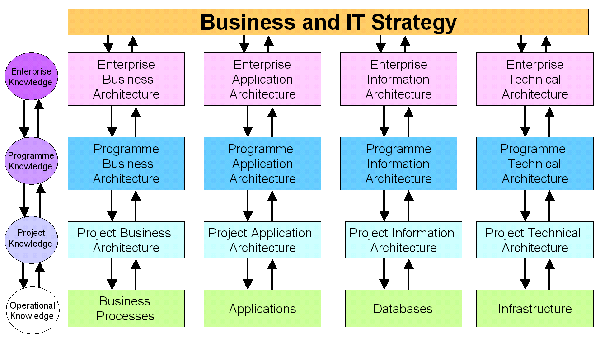
Happy New Year! It’s nice to be back again and writing about my favorite topic. This spring I’m speaking at the Enterprise Architectures Conference on Quick Wins in Enterprise Architecture so I thought I’d share a bit of the content. Enterprise Architecture as a new program within a company or an organization is difficult to kick off. Often there are so many things that need to get done, that we…
Too Many Cooks in the Kitchen – Enterprise Architecture Compliance Required

Does it ever seem that as an Enterprise Architect, we have many dragons to slay? Our organizations confuse the Chief Architect with chief technology problem solver, and it isn’t their fault. Often the current technology hot spot of the day is something that lives in the EA realm, and we are the captain of the ship. We’ve had many metaphors – the Builder, the Architect of a house, the City…
The Solution Architect and the Merger & Acquisition

Mergers & acquisitions – Calling All Architect’s – We’ve Got a Merger & Acquisition What are your IT Project Priorities – do you have one of those “Yours, Mine & Ours” situations??? What I mean is that when a business decides to buy another company, or merge with one, often there are multiple perspectives to project priorities. If one business arm decides they need a bigger sales force, and another…
Enterprise Architecture and Portfolio Management

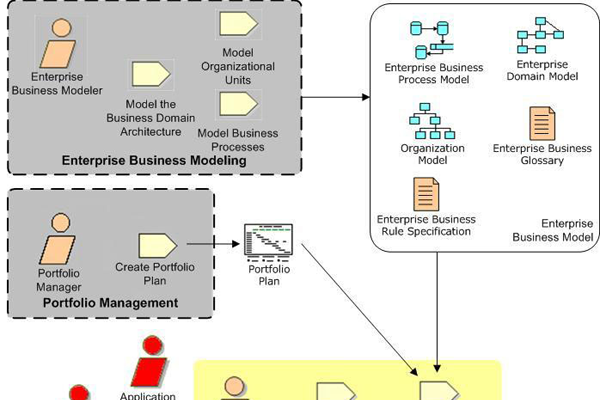
Ok – so maybe you haven’t heard the buzz about the marriage between EA and Portfolio Management. It’s been going on long enough to get the seven year itch already – so why should I go on about that today? My head hurts – I’ve been knee deep in the weeds building course ware for about three months and I’ve come up for air. It’s probably the first thing I thought of…