
Happy Holiday Weekend To My Canadian Friends:- Some of you luck ones may have fled your cubes, offices or project rooms – and for those of you left, you might be in for a little reading. If you have been considering the Canadian training coming up October 20-24th, there are still 3 spots available in the IT Architect Boot Camp workshop, and 4 spots in the Solution Architect workshop. It…
architecture
IT Architecture Training FAQs

First of all – reminder that the deadlines for early bird pricing on the Architect Boot Camp workshops in October are creeping up on us. Get your registration completed and reserve your spot at Early Bird Rates! There are limited seats, and all we need is your registration, and you’ve got your spot. We’ll send you confirmation and invoices. I’ve been answering a few questions in email lately, so I…
Enterprise Architecture Strategy – Do I Need A Strategy to Get One?

It’s nearing end of summer and slowly, folks are getting back from vacation or they are out shopping for school supplies. Maybe a last minute golf game with friends, or perhaps colleagues. A day at the beach if weather permits. As we see the first signs of the leaves turn color, we turn to that busy planning month of September. We all get back from the lazy (lazier?) days of…
The Enterprise Architect Purpose…

Part 1 of 5 part article… The primary purpose of an Enterprise Architecture (EA) is to inform, guide, and constrain the decisions for the enterprise, especially those related to IT investments. The true challenge of enterprise engineering is to maintain the architecture as a primary authoritative resource for enterprise IT planning. This goal is not met via enforced policy, but by the value and utility of the information provided…
Technical Architecture Landscape – Your Best Target?
In putting some efforts towards my fall seminar schedule, I have been focused on my Technical Architecture Workshops and had a thought today worth sharing. As enterprise architects, we attempt to capture business strategy and put some alignment to our IT Strategy, and formulate an IT Current State and IT Target State architecture. The IT plan is the people, process and technology initiatives that we plan for the year, and…
Setting the Scope for Enterprise IT Architecture

Recently, one of the people I have been coaching in the area of Enterprise Architecture asked me a great question – one worth posting here. He said “what is the scope of the Enterprise Architect?” in context to the head of Application Development, the Lead Analyst or the Solution Architect. I responded within the parameters of Enterprise Architecture at a company. EA provides IT governance and stewardship for any future…
What’s New with the Zachman Framework?
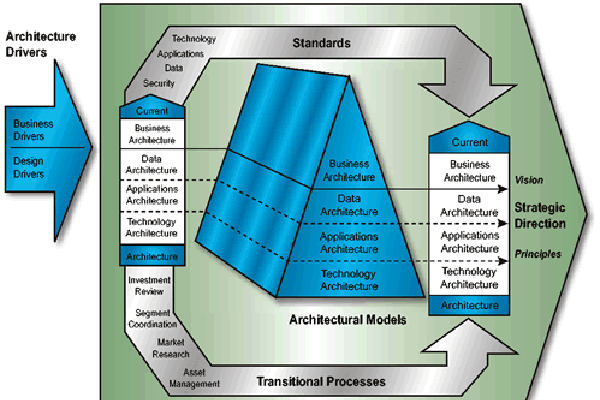
Someone asked me a philosophical, yet, appropriate question the other day. Why do I still continue to use a very simple framework in my coaching and consulting with Enterprise Architecture? I began using something called BAIT (business, application, information and technology), and turned to something else – BOAIT (business, organization, application, information and technology). I thought for quite a while, and went through what has changed since I started working…
Architecture Requirement or System Requirement – What’s the Difference?

Lately, I’ve been working on the Architect Boot Camp info site and trying to lay out some really basic architecture information and some more advanced stuff. It dawned on me that there might be some who don’t understand the difference between system requirements and architectural requirements. If this is news to you – stick with me. If not, I won’t waste your time – catch you later. Architecture requirements are…
Architecture Decisions
Long time, no type. I’ve been busy – but now have the time that this deserves. I’ve just spend a near year acting as the Chief Architect at a large Canadian insurance company, and have many thoughts and insights I’ve love to share. Here is one of the first. Often, an architect, especially the chief architect, is asked to make an architectural decision. Typically, an IT resource is asking him…
Quick Wins with Enterprise Architecture Methodology
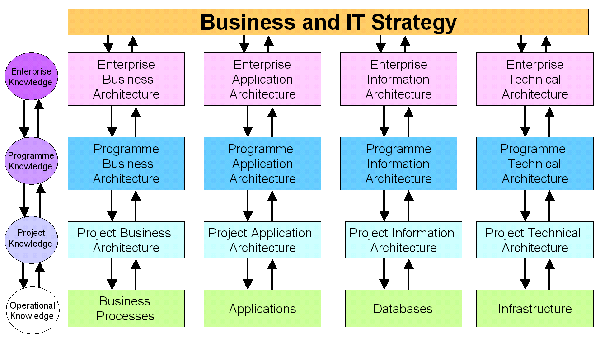
Happy New Year! It’s nice to be back again and writing about my favorite topic. This spring I’m speaking at the Enterprise Architectures Conference on Quick Wins in Enterprise Architecture so I thought I’d share a bit of the content. Enterprise Architecture as a new program within a company or an organization is difficult to kick off. Often there are so many things that need to get done, that we…
Architecture Governance – Abusing the Buzz Word

Well – it’s been far too long since I wrote – but I am committed to writing more. I’ve just been exposed to “governance Overload”. What is it you say? Well – after a weekend in Boston and time with the ultimate of buzz word abusers (this generic professional group shall remain nameless), I’m sick of “get it done”, “dropping the ball”, etc. etc. Instead – I come home to…
Business Architects In the Driver’s Seat

“By 2008, 40% of enterprise architects will have primary expertise in business strategy or process engineering” 2004 Meta Group, Inc. They get it. Businesses appreciate, accept and now accentuate the role of the architect in their organizations. It took some time, but they get it now. I might generalize and say that most medium size businesses have some sort of architecture function in their midst. I’d go further an say…
The Solution Architect and the Merger & Acquisition
Mergers & acquisitions – Calling All Architect’s – We’ve Got a Merger & Acquisition What are your IT Project Priorities – do you have one of those “Yours, Mine & Ours” situations??? What I mean is that when a business decides to buy another company, or merge with one, often there are multiple perspectives to project priorities. If one business arm decides they need a bigger sales force, and another…
Ethics in IT Architecture Skills

I’ve been away building and authoring courses, so writing has gone into something other than frivolous blurbs. Just came back from an evening with a speaker on ethics – it was supposed to have something to do with Ethics in IT and although that’s not what it was about, I was able to draw a few lines and relationships to IT from what the speaker had to say. A few…
The Importance of Data to a Systems Architect

Today I’m thinking about how important data design really is to solution design. I often wonder if our roots in Information Technology will always take over our thoughts – I used to work exclusively with data and moved on to Architecture. Now, when I work in the System Architecture space, particularly on design or solution, I revert to data – and often first. We need to understand what the data…